Home Studio vs Professional Studio: The Real Comparison (2024)
Stop guessing. Here's the honest comparison between building a home podcast studio and hiring a professional space. Spoiler: one option costs more than you think.
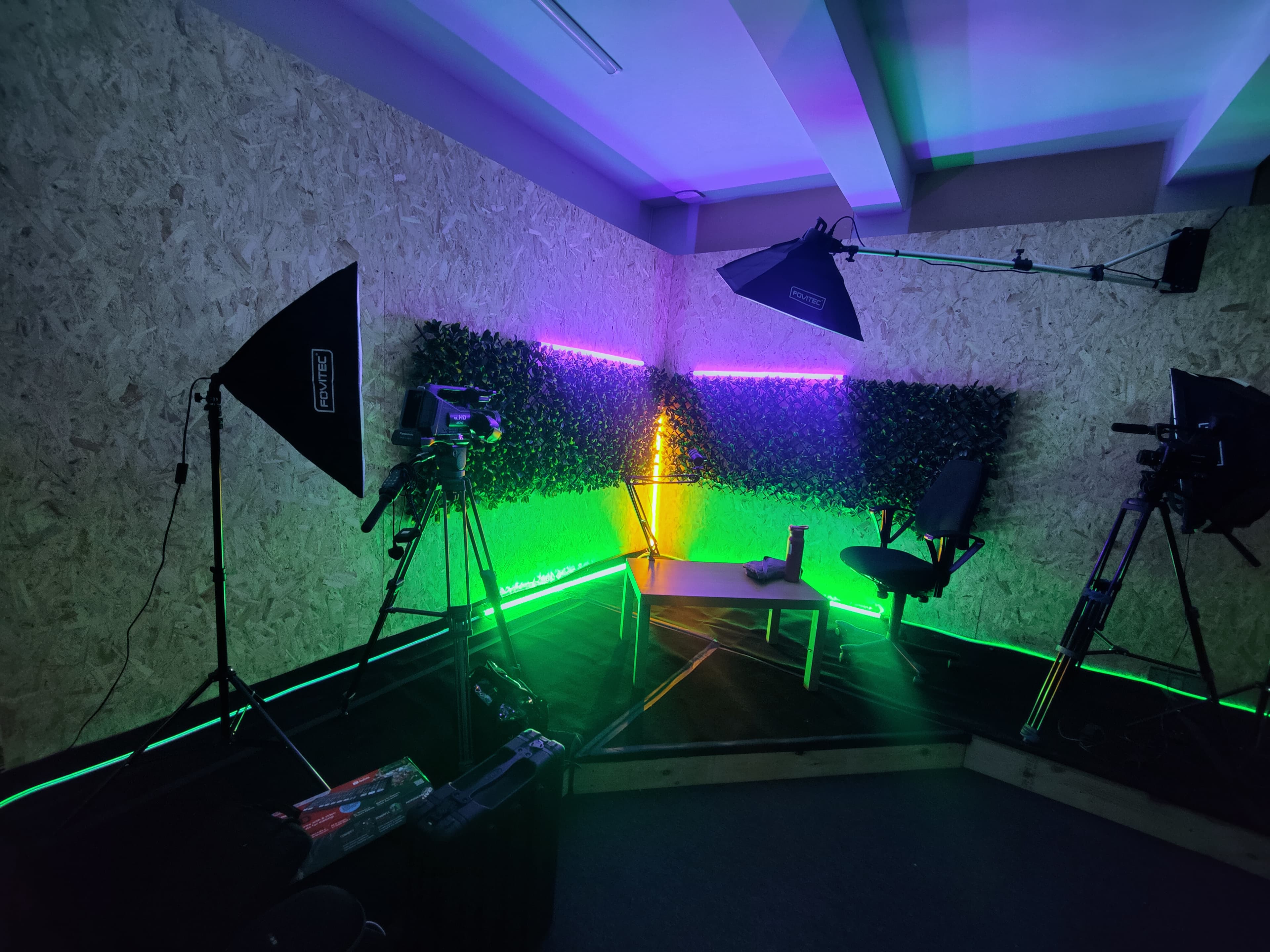
The real cost of home studios goes far beyond the equipment price tag.
Table of Contents
Let me tell you about the £5,000 mistake I see every week.
A founder walks into StreamToday with a Rodecaster Pro II under one arm, a Shure SM7B in the other, and that particular look in their eyes. The look of someone who's about to tell me they've "done the research."
"I've spent about five grand on equipment," they say, setting it all down on our reception desk like evidence in a trial. "But the audio still doesn't sound right. What am I doing wrong?"
Nothing. They're doing nothing wrong. That's the problem.
The podcasting industry has sold you a lie. It's the lie that equipment equals quality. That buying the right microphone will somehow transport your spare bedroom into a professional recording environment. That there's a direct correlation between money spent at Gear4Music and audio quality achieved.
There isn't. And the sooner you understand why, the sooner you'll stop burning cash on acoustic foam and start investing in what actually matters: your content.
The Hidden Costs of a Home Studio (That Nobody Talks About)
Let's start with the obvious. When people calculate the cost of a home studio, they typically think about equipment. Microphone, headphones, audio interface, maybe some acoustic treatment. Maybe £1,500-£3,000 depending on how fancy you want to get.
But that's not the real cost. Not even close.
The Acoustic Problem
Here's something the microphone manufacturers don't put on their packaging: your room matters more than your mic.
I don't care if you've bought a £400 Shure SM7B or a £3,000 Neumann U87. If you're recording in a 3x3 metre box with plasterboard walls and a window facing the street, you will get room reverb, traffic noise, neighbour's dog barking during your best take, and the hum of your laptop fan.
Professional studios spend tens of thousands on acoustic treatment. Not foam panels from Amazon (which barely do anything below 1kHz). I'm talking about bass traps in every corner, broadband absorption on reflection points, diffusers to control early reflections, decoupled floors, and HVAC systems designed for silence.
You cannot achieve this in a spare bedroom. You just can't. The physics don't work.
The Time Cost
But let's say you're determined. You've accepted that your home studio won't sound like NPR, but it'll be "good enough." Let's look at what "good enough" actually costs you in time.
Setup time per recording: Moving furniture (15 mins), setting up equipment (20 mins), testing levels (10 mins), dealing with technical issues (15 mins), packing everything away (15 mins). That's 75 minutes per episode before you've said a single word.
Post-production time: Noise reduction (30 mins), EQ and compression (45 mins), editing out mistakes (60 mins), mixing and mastering (30 mins). That's 2 hours 45 minutes per episode to make it sound acceptable.
For a weekly podcast, you're spending nearly 5 hours per episode on production. That's 20 hours per month. At the UK median hourly rate of £15.65, that's £313 per month in time cost alone.
Over a year? £3,756 in time. Plus your equipment. Plus the ongoing frustration of never quite getting it right.
The Opportunity Cost
But here's the real killer. While you're spending those 5 hours per episode wrestling with Audacity and watching YouTube tutorials on compression ratios, what aren't you doing?
You're not recording more episodes, growing your audience, building your business, or actually enjoying podcasting.
The amateur podcaster spends 80% of their time on production and 20% on content. The professional reverses that ratio.
What a Professional Studio Actually Delivers
Now let's look at what happens when you book a professional studio like StreamToday.
The Time You Get Back
Walk in. Sit down. Press record.
That's it. The equipment is set up. The levels are tested. The room is treated. The engineer is ready.
Your 75-minute setup becomes zero minutes. Your 2 hours 45 minutes of post-production becomes zero minutes (we edit live, as you record).
You walk out with a finished episode. Not raw files. Not a project that needs "fixing in post." A finished, broadcast-ready episode.
The Quality Difference
But it's not just about time. It's about what you can achieve.
In a professional studio, your voice sounds like your voice, not your voice plus room reflections. Multiple cameras capture angles you can't achieve with a webcam. Professional lighting makes you look like someone worth listening to. An engineer monitors levels in real-time, catching issues before they become problems. Backup systems ensure you never lose a recording.
The difference isn't subtle. It's the difference between sounding like an amateur and sounding like a professional. And in a medium where authority matters, that difference is everything.
The Hidden Benefits
But there's more. Things you won't find on a spec sheet:
Accountability: When you've booked a studio, you show up prepared. No "I'll do it tomorrow." The session is happening. You're ready.
Focus: No doorbells ringing. No emails pinging. No cat walking across your keyboard. Just you, your guest, and the conversation.
Energy: Professional environments create professional mindsets. You perform better when you're in a space designed for performance.
Scalability: Want to record video? We have three cameras. Want to livestream? We have the infrastructure. Want to bring in a guest remotely? We have the setup. Your home studio can't adapt like that.
The Real Cost Comparison
Let's put numbers on this. Actual numbers.
Home Studio (Year 1)
- Equipment (mid-range): £2,500
- Acoustic treatment (basic): £400
- Software and plugins: £300
- Time cost (20 hrs/month @ £15.65): £3,756
- Total Year 1: £6,956
Professional Studio (Year 1)
- 2-hour session per week @ £120: £6,240
- Zero time cost for production: £0
- Zero equipment cost: £0
- Total Year 1: £6,240
The professional studio is cheaper. And that's before we factor in the quality difference, the stress reduction, the scalability, and the consistency.
The 'Convenience' of Home Recording
This is the objection I hear most often. "I like being able to record whenever I want."
Do you? Do you really?
Or do you like the idea of being able to record whenever you want, while actually procrastinating because the setup feels like a chore?
Here's what actually happens with home studios: You intend to record on Tuesday. The room isn't set up. You'll do it Wednesday. Wednesday comes. You spend 45 minutes setting up. Something isn't working. You'll fix it Thursday. Thursday you finally record, but you're frustrated and it shows in the energy. Friday you try to edit, but Audacity crashes and you lose 20 minutes of work. Saturday you finally publish, a week late and thoroughly demotivated.
Professional studios create constraints. Constraints create consistency. And consistency is the only thing that grows a podcast.
The Equipment Trap (And How to Avoid It)
There's a particular type of person who loves researching equipment more than actually creating content. I know this person well. I used to be this person.
The equipment trap works like this: Your audio doesn't sound right. You research and conclude you need a better microphone. You buy the microphone. Audio still doesn't sound right. You research and conclude you need a better audio interface. You buy the interface. Audio still doesn't sound right. You research and conclude you need better acoustic treatment. You buy the treatment. Audio still doesn't sound right. Repeat until you have £5,000 of gear and zero good recordings.
The problem was never the equipment. The problem was the room. And you can't fix the room with more equipment.
Professional studios solved this problem decades ago. That's why they exist. Not because they have fancy microphones (though they do), but because they have rooms designed for recording.
When Does a Home Studio Make Sense?
I'm not anti-home studio. I'm anti-delusion. And the podcasting industry is built on delusion about what home studios can achieve.
A home studio makes sense if:
You're recording voice notes, not podcasts. If your content is rough, immediate, and conversational, a home studio is perfect. Don't overthink it.
You're testing the format. Before you commit to podcasting long-term, record 5-10 episodes at home. See if you enjoy it. See if your audience responds. Then invest properly.
You have a genuinely good space. If you happen to have a garden office, a basement, or a room with excellent natural acoustics, you might get decent results. Most people don't have this.
You're a technical person who enjoys the process. Some people genuinely love the production side. If that's you, great. But be honest with yourself. Are you procrastinating on content creation by obsessing over equipment?
You have unlimited time. If you're retired, or podcasting is purely a hobby with no business objective, the time cost doesn't matter. Enjoy the process.
For everyone else — everyone who wants to create professional content, grow an audience, and build authority — the math is clear.
The Psychology of Professional Environments
There's one more factor we need to discuss. It's not about equipment or acoustics or time costs. It's about how environments shape behaviour.
When you walk into a professional studio, something shifts in your mind. You're no longer "someone who podcasts." You're a podcaster. The imposter syndrome fades. The self-consciousness evaporates. You perform at your best because you're in a space designed for performance.
Your guest feels it too. They walk in and think, "This person is serious." The dynamic changes. The conversation elevates. You both bring your A-game because the environment demands it.
You cannot replicate this in your spare bedroom. The context is wrong. The frame is wrong. And framing — as Rory Sutherland would tell you — changes everything.
The Verdict
Here's the honest truth: most people who build home studios do so because it feels like progress. Buying equipment feels like moving forward. Setting up a room feels like commitment.
But it's fake progress. It's procrastination dressed as productivity.
The real progress is recording episodes. Publishing consistently. Growing your audience. Building your authority. And you can't do any of that while you're troubleshooting audio interfaces.
A professional studio isn't an expense. It's a filter. It filters out the technical problems, the acoustic issues, the production headaches. It leaves you with one thing: the ability to focus entirely on your content.
And if your content isn't worth that focus, you have a bigger problem than where you record.
What to Do Next
If you're currently wrestling with a home studio that's not delivering, here's my suggestion:
Book one session at a professional studio. Just one. Two hours. See what becomes possible when the technical barriers disappear.
Compare that episode to your last home recording. Not just the audio quality — the energy, the focus, the enjoyment.
Then ask yourself: what is my time worth? What is my content worth? What is my sanity worth?
The answer might surprise you.
Ready to skip the equipment trap?
Book a session at StreamToday Studios in Nottingham's Lace Market. We specialise in removing the barriers between you and great content. Live editing, professional acoustics, broadcast-quality equipment — everything you need, nothing you don't.
Book a Session →Related Articles
StreamToday Studios
Nottingham's premier podcast studio with live editing. We help creators produce professional content without the technical headaches.