Production
13 min read
StreamToday Studios

The Nottingham Podcast Studio That Edits While You Record (Yes, Really)

The Nottingham Podcast Studio That Edits While You Record (Yes, Really)

Or: how I learned to stop worrying and love the live edit
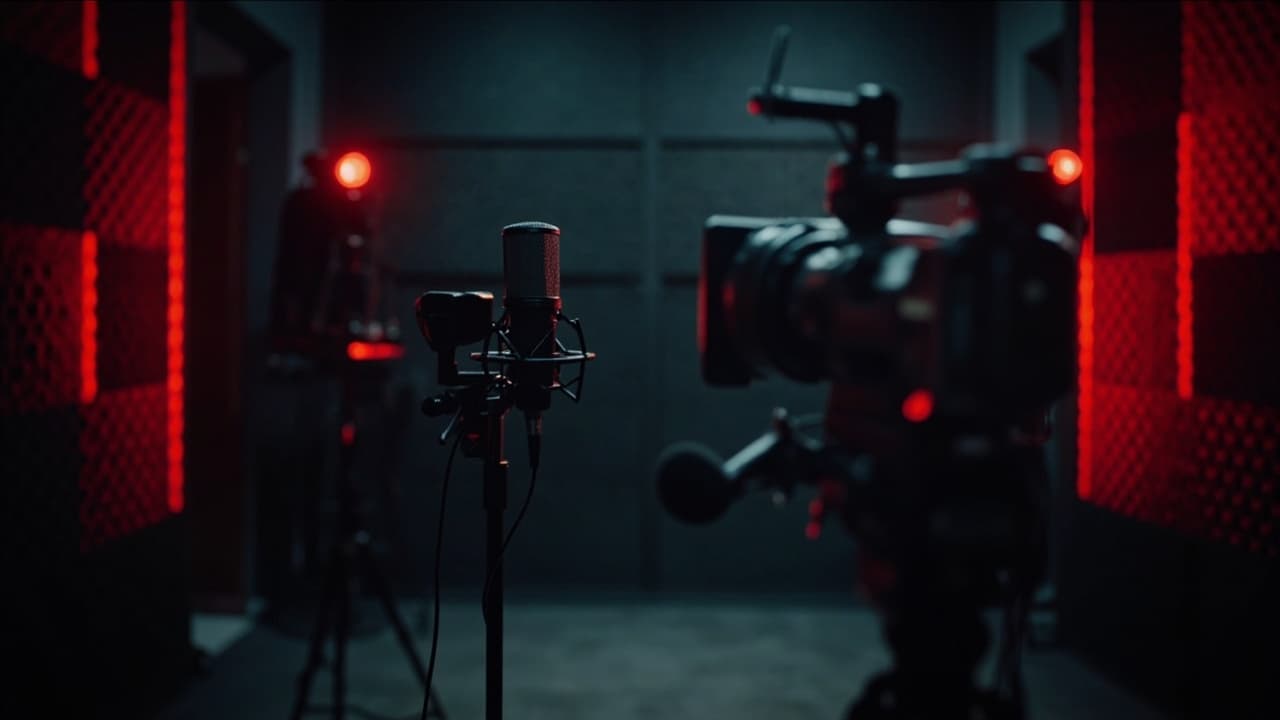

Let me tell you about the most magical phrase in podcasting. It's not "we'd like to sponsor your show." It's not "you've gone viral." It's not even "your download numbers are incredible."

It's this: "That's a wrap. Your content is ready."

Not "that's a wrap, now spend six hours editing." Not "that's a wrap, I'll send you the files tomorrow." Just: done. Finished. Walk out with publish-ready content.

This is what live editing means. And it's the single biggest competitive advantage in podcast production today. Which is convenient, because it's also the thing that almost nobody else is doing.

The Traditional Podcast Production Nightmare

Here's how podcast production normally works:

Step 1: Recording (2 hours) You show up at the studio. You record your episode. The engineer gives you a thumbs up. You feel good about life.

Step 2: The Waiting (24-72 hours) The studio sends your files to an editor. The editor puts you in their queue. You wait. Maybe you get a rough cut in 24 hours. Maybe it takes three days. Maybe the editor is on holiday and nobody told you.

Step 3: The Revision Cycle (2-5 days) You get the edit back. It's... fine. But they cut that story you really liked. And the audio levels are a bit uneven. And there's a weird noise at 23:47 that nobody noticed. You send feedback. You wait again. You get a revision. It's better but still not quite right. You debate whether to ask for another revision or just accept "good enough."

Step 4: The Final Polish (1-2 days) You approve the edit. Now it needs mixing and mastering. Another day passes. You get the final file. It sounds good. You're relieved. You're also four days removed from the recording session and you've forgotten half of what you talked about.

Step 5: Publication (Finally) You upload to your hosting platform. You write show notes from memory because you can't face listening to the episode again. You create social media posts. You schedule everything. Your episode goes live a week after you recorded it.

Total time from recording to publication: 5-10 days. Total mental overhead: Significant. Total enthusiasm remaining: Depleted.

This is the standard workflow. This is what most podcasters accept as normal. This is also why most podcasters burn out after 20 episodes.

The Live Editing Revolution

Now let me tell you how it works with live editing:

Step 1: Recording (2 hours) You show up at the studio. You record your episode. While you're recording, the engineer is mixing the audio in real-time, balancing levels, applying EQ and compression, removing background noise. Multiple cameras are capturing different angles. The engineer is switching between camera feeds live, creating a multi-camera edit as you go.

Step 2: The Live Edit (Happens during Step 1) While you're recording, the engineer is also editing. They're cutting out the false starts, the "ums" and "ahs," the technical interruptions. They're creating the rough cut in real-time, so by the time you finish recording, the edit is already 80% done.

Step 3: The Final Polish (30 minutes) You take a break. You have a coffee. The engineer does a final pass on the edit, adds your intro music, balances everything for broadcast. Maybe you watch it through together and make a couple of tweaks.

Step 4: Walk Out With Content (Immediate) You leave the studio with finished files. Audio podcast: ready to upload. Video podcast: ready to publish. Social media clips: already extracted and formatted.

Total time from recording to publication: 2-3 hours. Total mental overhead: Minimal. Total enthusiasm remaining: High. You just created content and you still have energy to promote it.

This is not a marginal improvement. This is a fundamental transformation of the production workflow.

Why Live Editing Changes Everything

The benefits of live editing extend far beyond just saving time. Though it does save time - approximately 8-10 hours per episode, if you're counting. But the real advantages are more subtle and more powerful.

1. The Feedback Loop

When you record traditionally, you don't hear the final mix until days later. By then, you've forgotten the context. You can't remember why you paused at 14:23 or whether that laugh was genuine or nervous. You're making editorial decisions from a position of distance and confusion.

With live editing, you hear the mix as it happens. You can adjust your performance in real-time. If the levels are wrong, you know immediately. If there's a technical issue, it's fixed on the spot. You're not guessing whether something worked - you're hearing it work.

This creates a feedback loop that dramatically improves performance quality. You become more confident because you can hear that you sound good. You become more relaxed because you're not worrying about technical issues. You become more present because you're not mentally calculating how much editing work you're creating.

2. The Energy Preservation

Podcasting is energy-intensive. Recording requires focus, creativity, and emotional presence. Traditional production then requires you to revisit that same energy days later, when you're in a completely different mental state, and make editorial decisions about content you barely remember.

Live editing preserves your creative energy. You record, you review, you approve, you move on. The mental load of production doesn't hang over you for days. You don't wake up at 3 AM worrying about whether the editor understood your vision. You walk out of the studio and your work is done.

This energy preservation is cumulative. Over 10 episodes, traditional production might cost you 80-100 hours of mental overhead. Live editing costs you zero. That's 80-100 hours you can spend on content strategy, audience building, or literally anything else.

3. The Iteration Speed

Here's something they don't tell you about successful podcasts: they're iterative. The first 10 episodes are experiments. You're figuring out your format, your style, your audience. You need to be able to try things, evaluate them, and adjust quickly.

Traditional production makes iteration painful. You record on Monday, you get the edit on Thursday, you realise the format isn't working, but you can't implement changes until next week's recording. Your learning cycle is measured in weeks.

Live editing compresses that cycle to hours. You record, you review, you identify improvements, you implement them in the next session. You can evolve your format week by week instead of month by month. This is how you find your voice quickly instead of slowly.

4. The Content Multiplication

Remember the content stack? The idea that one recording session should produce multiple pieces of content in multiple formats? Live editing makes this practical.

While you're recording, the engineer can be:

  • Switching between camera angles for the main video
  • Recording isolated audio tracks for better mixing
  • Marking timestamps for social media clips
  • Capturing B-roll of the recording process
  • Creating real-time audiograms

By the time you finish recording, you don't just have a podcast episode. You have:

  • The full video podcast
  • 3-5 short-form video clips optimised for different platforms
  • 5-10 audiograms with waveforms and captions
  • Behind-the-scenes content
  • Quote graphics extracted from the transcript

This is the content multiplication effect. One session, ten+ pieces of content, all produced in the same 2-hour window. This is how you fill a social media calendar without spending your life editing.

The Technical Magic (Explained Simply)

How does live editing actually work? Without getting too technical, here's what's happening behind the scenes:

Multi-track Recording: Every microphone is recorded on its own track. Every camera is recorded on its own feed. This gives the engineer maximum flexibility in post-production.

Real-time Mixing: The engineer is listening to all tracks simultaneously and adjusting levels, EQ, and compression live. This means the audio is broadcast-ready the moment you stop recording.

Vision Mixing: The engineer is switching between camera feeds in real-time, creating a multi-camera edit as you perform. This is the same technique used in live television.

Live Marking: The engineer is marking timestamps for edits, clips, and notable moments as they happen. This makes the final edit much faster because the decisions are already made.

Integrated Systems: The audio mixer, video switcher, recording devices, and monitoring systems are all integrated. Changes happen instantly across all platforms.

The result is a production workflow that would traditionally require a team of 4-5 people, compressed into the work of one highly skilled engineer with the right equipment.

Why Almost Nobody Else Does This

If live editing is so great, why doesn't every studio offer it? Three reasons:

1. It requires expensive equipment. A live editing setup needs professional audio mixers, video switchers, multi-track recorders, and monitoring systems. This is £30,000+ of equipment, minimum. Most studios are running simpler setups that can't support live production.

2. It requires skilled engineers. Live editing is demanding. The engineer is mixing audio, switching cameras, marking edits, and monitoring quality all simultaneously. This requires training, experience, and genuine multi-tasking ability. Not every studio has access to engineers at this level.

3. It's hard to explain. "We have nice microphones" is easy to understand. "We edit live using a multi-track digital audio workstation integrated with a vision mixer and real-time monitoring" is not. Most studios stick to simple value propositions because they're easier to market.

This is why live editing is still rare. Not because it doesn't work, but because it's difficult to implement and even more difficult to explain. Which creates an opportunity for the studios that can do both.

The Competitive Advantage

Let's talk about what live editing means for your podcast specifically. Not in abstract terms, but in practical, competitive advantage terms.

Speed to Market: Your competitor records on Monday, publishes the following Monday. You record on Monday, publish on Monday. You're a full week ahead in the content cycle. Over a year, that's 52 extra weeks of content building audience while they're still waiting for edits.

Quality Consistency: Your competitor's quality varies based on which editor they got, what mood they were in, whether they understood the brief. Your quality is consistent because you review it before you leave. You know what you're publishing.

Content Volume: Your competitor produces one episode per week because they can't face the production overhead of more. You can produce 2-3 episodes per week because production doesn't drain you. More content = more audience growth = more opportunities.

Mental Health: Your competitor is stressed about production, anxious about edits, burned out after 20 episodes. You're still enthusiastic after 50 episodes because the process doesn't deplete you. Sustainability is a competitive advantage.

Experimentation: Your competitor sticks to their format because changing it means more editorial complexity. You can experiment freely because you can evaluate and adjust immediately. The podcast that evolves fastest captures the audience.

This is what live editing gives you. Not just efficiency, but competitive advantage across every dimension that matters.

The Objections (Addressed)

Let me anticipate your objections:

"But I like editing. It's part of my creative process." Fair enough. Some people genuinely enjoy editing. But be honest with yourself: do you enjoy editing, or do you enjoy having edited? There's a difference. If you truly love the technical craft of audio production, then a home studio might be right for you. But if you just like the feeling of having created something, live editing gives you that feeling immediately without the 10-hour labour.

"What if I want to make changes later?" You can. You get all the raw files. If you want to re-edit something a week later, you have that option. Live editing doesn't prevent future editing; it just removes the obligation to do it immediately.

"What if the live edit isn't perfect?" It's not perfect. It's 80-90% perfect, which is better than most traditionally edited podcasts. You can do a final polish pass if you want. But "80% perfect and done" beats "100% perfect and delayed" every time.

"This sounds expensive." It's not. Or rather, it's not relative to the value. Consider what your time is worth. If you spend 10 hours editing an episode, and your time is worth £50/hour (which it should be if you're building a business), then editing costs you £500 per episode. A live editing studio session costs £300-400. You're saving money and getting better results.

"What if I want to learn editing myself?" You can still learn. But learn on your own time, with your own projects, not when you're trying to build an audience. Don't make your audience wait while you develop skills they don't care about.

The Calm Authority Statement

Live editing is not a gimmick. It's not a marketing buzzword. It's a fundamental rethinking of the podcast production workflow that removes the friction that kills most podcasts. The studios that offer it are not just providing space and equipment; they're providing a sustainable path to consistent content creation.

What to Look For

If you're evaluating studios, here's how to identify genuine live editing capability:

Ask about their workflow: "Walk me through what happens after I finish recording." If they mention sending files to an external editor, that's not live editing. If they mention you'll leave with finished content, that's live editing.

Ask about their equipment: "What mixing desk do you use?" If they mention a simple 2-channel interface, that's not live editing. If they mention a multi-track digital mixer with integrated recording, that's promising.

Ask about video: "How do you handle multi-camera editing?" If they mention editing in post-production, that's not live editing. If they mention vision mixing or live switching, that's live editing.

Ask about deliverables: "What do I walk out with?" If they mention raw files, that's not live editing. If they mention finished content, that's live editing.

The Nottingham Advantage

Here's the thing about Nottingham: it's underserved. London has dozens of podcast studios, most of them offering traditional post-production workflows. Manchester has several. Birmingham has a few.

Nottingham has... almost nothing. There's us, and there's a handful of music studios that will rent you a room but don't understand podcasting. The market is wide open.

This means two things:

  1. If you're a Nottingham podcaster, you don't have to travel to London or Manchester for professional production. We're here, in the Lace Market, with live editing capability that rivals anything in the capital.

  2. If you're targeting a Midlands audience, being recorded in Nottingham is an advantage. You're not another London voice. You're part of the regional creative scene.

The Bottom Line

Live editing is the future of podcast production. It's faster, better, and more sustainable than traditional workflows. The only reason it's not universal is that it's technically difficult and expensive to implement.

But here's the good news: you don't need to implement it. You just need to find a studio that has. And now you know what to look for.

The question isn't whether live editing is worth it. The question is: how many more episodes are you going to struggle through with traditional production before you try the better way?


Ready to experience live editing? Book a session at StreamToday Studios. Walk in with ideas, walk out with finished content. It's really that simple. No editing queue. No revision cycles. No waiting. Just content, created efficiently.

P.S. - We built the live editing capability because we got tired of waiting for editors too. Sometimes the best solutions come from solving your own problems.

Ready to create professional content?

Book a session at StreamToday Studios. Walk in with ideas, walk out with finished content.

Book Your Session →